By: Mike Fong and Laura Solis, Lower Valley Matters
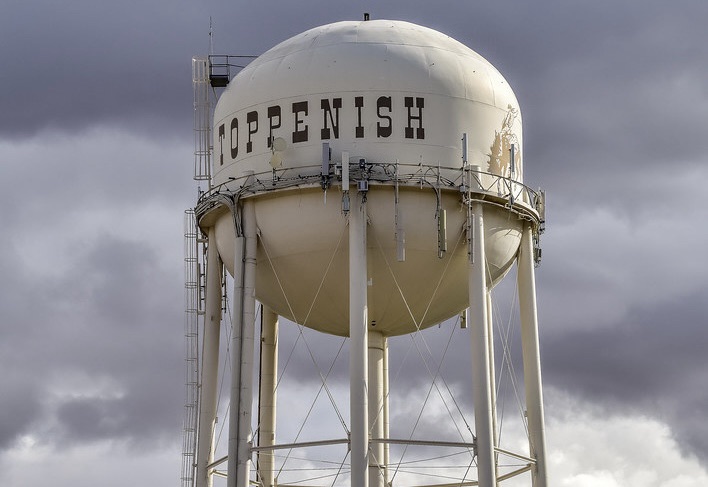
Grandview’s utility tax on garbage is 42%. Sunnyside’s taxes on water, sewer, and garbage are at 31% for each. Granger has a 36% tax across all three utility services. Toppenish taxes all three services at 29%. This means that for every $1.00 of service residents pay for these utilities, they are charged another $0.29 – $0.42 cents to help pay for basic government services like police, parks, and roads.
As local governments face increasing challenges to maintain funding for operations, cities in the Lower Valley have turned more and more to utility taxes as a source of revenue. For example, last year, Sunnyside approved a 2% increase to these utilities to rescue a community pool, and Grandview applied increases ranging from 3-5% to garbage, water, and sewer taxes that took effect in January of this year. With cost of living and inflation consistently ranking among the top concerns for Washington State residents, Lower Valley Matters explored why these utility taxes are so high for residents in this area.
Background. Under state law, there is no cap for taxes on water, sewer, stormwater, and solid waste (garbage). Raising these taxes does not require a public vote. Although the vast majority of the state’s 200 cities have raised taxes on non-electric and non-gas utilities to help fill ongoing budget deficits, Grandview’s 42% on garbage is the highest tax for any single utility service, and Granger’s 36% for water, sewer, and garbage is the highest tax on these combined utilities for any city in the state.
Keep in mind that utility taxes are not utility rates. Utility rates are set to reflect the cost of the service itself, like maintaining the pipes to run the water, the salary of the employee clearing out drains, and buying new garbage collection trucks. It can be difficult to distinguish between taxes and rates because they are typically rolled up into one bill each month or every other month.
Property Tax Cap and Low Sales Tax Receipts. There are two key factors that could explain why local governments have turned to utility taxes as the go-to option to help fund basic services: a cap on property tax collected by local governments and a lower sales tax base.
Property taxes have not kept up with rising costs or increased demand for local services. Since 2001, by state law, the total amount of property taxes collected by a city or county cannot go above 1% than what was collected in the previous year without voter approval. But the annual rise in the cost of goods and services outpaces this amount (on average, inflation is about 3.5% a year). Also, as a city’s population grows (on average 1.5% a year), the need for local services also grows.
This does not mean that your individual property taxes can’t go above 1%. Individual property taxes are based on assessed property values, voter-approved levies, and other taxing districts like schools or EMS. But overall, city property tax revenues are not keeping up with the cost of delivering city services – and that gap has grown bigger over the past 25 years.
Another factor contributing to local governments’ reliance on higher utility taxes compared to other parts of the state is that the Lower Valley has a much smaller sales tax base from which cities can generate revenues. For example, much of the commercial agricultural economy of the region is exempt from sales tax. And there is less discretionary spending on luxury goods, restaurant dining, clothing, high-end services, etc., and a smaller footprint of large scale commercial retail operations, like malls and high-traffic shopping corridors, compared to other parts of the state.
Cost Burden and Who Pays. Taxes on utilities are arguably the most regressive of all taxes. Regressive taxes, like sales and gas taxes, are ones where everyone pays the same flat rate or percentage. Progressive taxes, on the other hand, capture a larger share of revenue from higher-income earners than lower-income earners. Examples of progressive taxes are capital gains tax and estate taxes.
Property taxes fall somewhere in the middle of the scale between progressive and regressive; although you pay more if your property is worth more, property taxes take a bigger slice of the overall household budget for lower-income families compared to wealthier families. Renters also feel the effects of property taxes when they pay their rent.
Everyone, regardless of income, is taxed at the same rate for water, electricity, heating and garbage services. These services are essential for human survival. But given Washington State’s regressive tax structure and budget deficits for delivering on basic government services, local governments may not have much of a choice. The result is that more of the burden is falling on residents of the Lower Valley at a time of diminishing affordability everywhere.
If you found this article interesting, follow us at https://www.facebook.com/profile.php?id=61593626991667

